
What’s Included in a New Park Home: Move-In-Ready vs Bricks and Mortar
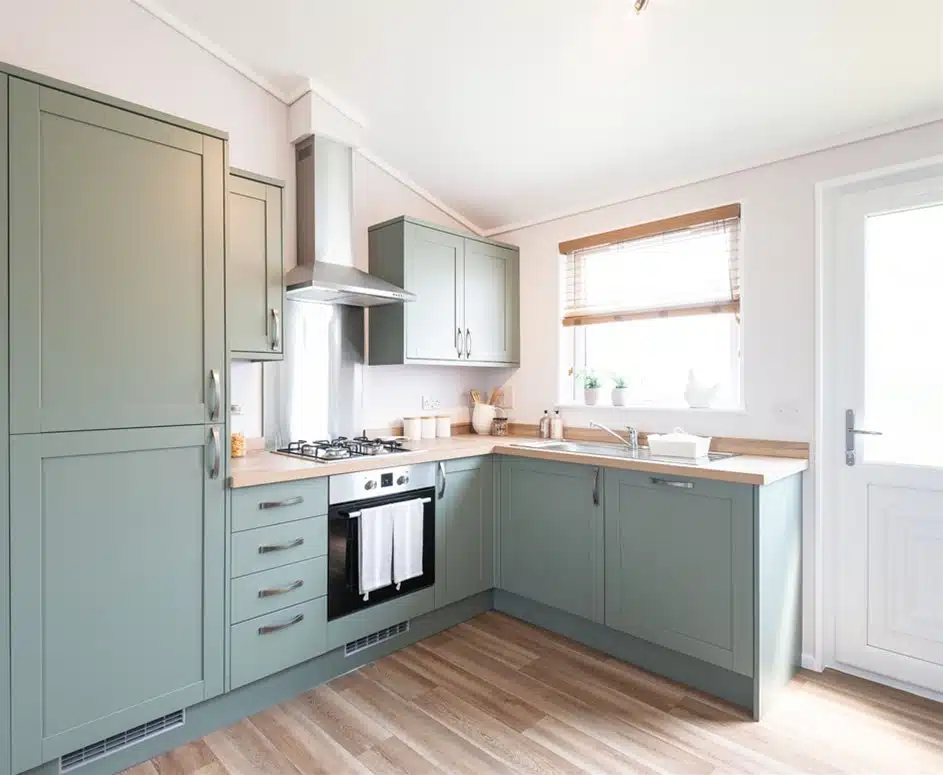
What’s included in a new park home is one of the most useful questions you can ask, because the answer changes what you’ll actually spend to get settled. A purchase price sounds like the whole story: you pay it, you get the keys, you move in. Buy a home the traditional way, though, and the keys are rarely the end of the spending.
This blog compares what a brand new Tingdene Residential Park home includes against buying a new-build house or a retirement apartment the usual way, so you can see what your money actually covers in each case.
The Extras That Aren’t in the Headline Price
On a new-build house, “new” and “finished” aren’t quite the same thing. The price usually covers the structure and the kitchen units, but rather less of what turns a shell into a home you can properly live in. A good chunk of the fit-out is priced separately, and it’s easy to miss until the quotes start landing.
Depending on the developer and the plot, here’s how those extras can stack up on a traditional new-build:
| Fit-Out Item | Typical Added Cost |
| Flooring (whole house) | £1,500 to £5,000 |
| Kitchen appliances | £1,200 to £2,500 |
| Turf and fencing | £1,500 to £4,000 |
| Garage doors | £800 to £2,500 |
| Driveway | £2,000 to £5,000 |
| Potential Total | £7,000 to £19,000 |
*Figures are indicative and vary by size, spec, garden and developer. Ranges compiled from UK trade cost guides (Checkatrade, MyBuilder), 2025/26.
Add it up and you’re often several thousand pounds past the purchase price before the house feels finished, and that’s before soft furnishings or a stick of furniture. A retirement apartment can carry its own extras too, from service charges to ground rent, which don’t show up in the sale price either.
A brand new park home works differently. It’s built to arrive move-in ready, with flooring, appliances and often furnishings already in place, so far less of your budget goes on turning a new house into a liveable one.
So the fair question isn’t only what a home costs, but what you actually get for it. The rest of this guide takes that apart across four points: the fit-out, build quality, how move-in ready the home genuinely is, and the buying process itself.
1. Furnishings, Appliances and Fit-Out
A fully furnished retirement park home is one you can move into with little more than a suitcase and a kettle. That’s the main difference from buying the traditional way, and it’s worth being precise about what it means.
Take The Regency, for example: it’s listed with a bright lounge and diner and a fully fitted kitchen with integrated appliances, built to BS 3632 standards and backed by a 10-year warranty. The spec sheet on each home sets out exactly what’s included, and it varies from model to model, so it’s always the thing to check. As a rule, a brand new residential park home sold as furnished will typically come with a fitted kitchen, a bathroom suite, lounge and dining furniture, carpets, curtains and a working set of appliances. You can see what comes with each of our homes for sale on its own listing.
Here’s how that stacks up against the two traditional routes:
| What’s Included | New Park Home (Sold Furnished) | New-Build House | Retirement Apartment |
| Fitted kitchen | Yes | Usually | Often |
| Appliances (oven, hob, fridge) | Yes | Rarely | Patchy |
| Washing machine | Yes | Rarely | Often excluded |
| Flooring and carpets | Yes | Usually extra | Varies |
| Curtains or blinds | Yes | Rarely | Varies |
| Lounge and dining furniture | Yes | No | No |
The pattern is clear. A park home arrives ready to live in, a new-build house hands you a shell with a kitchen in it, and a retirement apartment sits somewhere in between.
And here’s the number that makes it land. According to research by Shepherds Friendly, homeowners spend around £15,000 furnishing a three-bedroom home from empty. A furnished park home isn’t a small detail; it’s roughly that much you don’t have to find on top of the purchase price.
2. Build Quality and Energy Efficiency

Modern park homes are built for warmth and year-round comfort, with high levels of insulation and double glazing included as standard rather than sold as an optional upgrade.
Every home built to BS 3632 standards has to meet set requirements for construction, insulation and ventilation before it can be lived in all year round. In practice that means high levels of insulation in the floor, walls and roof, and double glazed windows as standard. It’s what makes a modern park home suitable for full-time, permanent living rather than seasonal use.
The 2023 revision of the standard went further still, tightening the U-values for floors and walls and adding provision for renewable-energy systems and thermostatic radiator valves on the central heating. These are written into the standard itself, so they’re part of what you’re buying, not an upsell.
Worth knowing: our running-costs guide doesn’t put a firm pounds-per-year saving on this, and neither will we, since so much depends on the home and how you live in it. What it does say is that homes built to BS 3632 are made to hold heat more effectively, which tends to show up in lower utility bills. If you’d like the fuller picture, our guide to park home running costs goes through it properly.
On top of the standard, models like The Regency come with a 10-year warranty, which gives you a clear line of recourse if something isn’t right after you move in.
3. Genuinely Move-In Ready, Not Just On Paper
Getting the keys to a brand-new house and being handed a snagging list in the same week is more common than most buyers expect.
A new park home arrives ready to live in. That’s the plain meaning of a move-in ready home: the day you move is the day it’s done, with the kitchen fitted, the appliances in and the floors down. Your first months are spent settling in rather than chasing a builder.
4. The Buying Process Itself

You don’t have to sell your current home entirely on your own before you can move. Two Tingdene schemes take that pressure off, in different ways.
Part Exchange
With Part Exchange, and subject to a valuation of your home, a third party makes an obligation-free offer to buy your existing property once you’ve reserved your new plot. It’s a cash purchase, so there’s no chain to collapse and no mortgage offer to wait on. You’re not asked to move out until your new home is ready, there are no estate agency fees, and the offer costs you nothing to receive. For most people there’s plenty of equity in bricks and mortar, so it’s a straightforward way of releasing equity to fund the move.
Assisted Sale
Assisted Sale may suit you better if you’d rather sell on the open market but not run the sale yourself. Our Move+ team instructs local estate agents to value and price your home, lists it, and manages every agent conversation on your behalf. You get weekly update calls, offers are qualified so you aren’t left with a shaky chain, and a dedicated Sales Progressor sees the sale through to completion.
Both do the same underlying job. They take the part of moving that stalls most people, selling the old home, and hand it to someone else, which is a lot of the peace of mind people are really after. There’s more on both in our guide to buying with us.
What You’ll Pay Once You’ve Moved In
The purchase is only half the picture, so it’s worth being clear on the ongoing costs too. With a retirement park home, you own the home but not the land it sits on, so there are a few running costs a house doesn’t have.
- Pitch fee: A monthly fee paid to the site owner for the plot your home sits on. It’s reviewed once a year, and in England any increase is now linked to the Consumer Price Index, so it tracks inflation rather than jumping around.
- Council tax: Park homes are still liable for council tax, but they typically sit in Band A, the lowest band, so it’s usually lower than an equivalent house.
- Utility bills: Gas, electricity and water work much as they would anywhere, though a well-insulated BS 3632 home tends to keep those bills down.
- No stamp duty: One cost you avoid entirely, since park homes aren’t subject to stamp duty. On a traditional house at this price, you could pay a few thousand pounds in stamp duty alone, so what you save going in helps balance the commission you’d pay when you eventually sell.
- Commission on resale: Another thing worth knowing upfront is that if you sell your park home, the site owner is entitled to a commission of up to 10% of the sale price. It’s set by law and standard across the sector.
The Bottom Line

Four things separate a new park home from the traditional route, and they pull in the same direction. The fit-out saves you the approximate £15,000 it costs to furnish a home from empty. The build standard includes high levels of insulation and double glazing into the home as standard, not as optional upgrades. The home is genuinely ready on the day you move. And the buying process can take on the sale of your current place.
Together that’s rather more included in the price than a new-build or a retirement apartment usually offers. So if not having to source flooring, appliances and furniture yourself is what would make your move easier, a Tingdene Residential Park home is well worth comparing properly against the alternatives. If you’re still getting to grips with how it all works, our beginner’s guide to park home living is a good place to start.
The simplest next step is a conversation. Arrange a discovery call and we’ll talk through the numbers for your own situation.
Frequently Asked Questions
A few questions come up again and again when people are weighing a park home against a house or an apartment. Here are the ones we’re asked most, with a steer on where to get proper advice. A lot depends on your own circumstances, so treat this as a starting point rather than the final word.
Can I get a mortgage on a park home?
Not a standard residential mortgage. Because you own the home but not the land it sits on, park homes sit outside the usual high-street mortgage market, so buyers generally fund the purchase through savings or the proceeds of selling a previous property. It’s worth lining up how you’ll pay before you reserve a home, as the route is a little different from a conventional house purchase.
Do I pay stamp duty on a park home?
No. Park homes are exempt from stamp duty, so it’s one less cost when you buy, unlike a traditional house where stamp duty can add a few thousand pounds to the purchase. Council tax also tends to sit in a lower band, typically Band A, though the band is set per home, so it’s worth checking the one you’re considering. For anything specific to your situation, check with the relevant authority rather than relying on a general rule.
What if I can’t sell my current home before I want to move?
You have two routes. Part Exchange lets us buy your current property directly with an obligation-free cash offer, no chain, and no need to move out until your new home is ready, subject to a valuation. Assisted Sale has our Move+ team market and manage the sale for you. See The Buying Process Itself above for the full breakdown, or browse the move-in-ready homes available now.